From Search to Answer Engines: The Rise of GEO

- Jul 21, 2026 modified: Jul, 21 2026
From Search to Answer Engines: The Rise of GEO
The Rise of Generative Engine Optimization (GEO): How AI Is Changing Search Forever
The way people search for information is undergoing one of the biggest transformations since the launch of Google. For decades, traditional search engines have guided users through lists of web pages, allowing them to compare sources and find answers independently. Today, however, artificial intelligence is changing that experience.
Instead of scrolling through multiple search results, users are increasingly turning to AI-powered tools that deliver direct, conversational answers. Platforms like ChatGPT, Google's AI Overviews, Perplexity, Microsoft Copilot, and Gemini can summarize information from multiple sources in seconds, reducing the need to click through numerous websites.
This shift has created a new challenge for businesses, publishers, and content creators: how do you ensure your content is referenced by AI-generated answers, not just ranked in traditional search results?
The answer lies in Generative Engine Optimization (GEO)-an emerging digital marketing strategy focused on improving a brand's visibility within AI-powered search experiences.
While Search Engine Optimization (SEO) remains essential, optimizing solely for search engine rankings is no longer enough. Today's content must also be structured, trustworthy, and contextually rich so that AI models can confidently retrieve, understand, and reference it when responding to user queries.
What Is Generative Engine Optimization (GEO)?
Generative Engine Optimization (GEO) is the practice of creating and optimizing digital content so that generative AI systems can easily discover, understand, and reference it when producing AI-generated responses. Rather than focusing exclusively on improving rankings in traditional search engine results pages (SERPs), GEO aims to increase a brand's visibility within conversational AI platforms that synthesize information into direct answers.
Unlike conventional search engines, which typically present users with a list of links, generative AI tools analyze information from multiple sources before producing a single, comprehensive response. When a user asks a question such as "What are the benefits of acrylic plastic?" or "How do I choose the right car tyre?", an AI assistant may generate a concise explanation that draws from several authoritative websites instead of directing the user to one page.
This fundamental change means that visibility is no longer determined solely by where a webpage ranks. Instead, it increasingly depends on whether AI systems consider the content accurate, trustworthy, relevant, and useful enough to incorporate into their responses.
- Easy for AI systems to interpret and summarize
- Rich in factual, authoritative information
- Organized with clear headings and logical structure
- Supported by credible sources and evidence
- Comprehensive enough to answer user intent
- Regularly updated to maintain accuracy
In many ways, GEO builds upon the same principles that have always defined high-quality SEO: creating valuable content for users. The difference is that the audience now includes not only human readers but also AI systems responsible for synthesizing information at scale.
As AI-powered search continues to expand, businesses that consistently publish accurate, well-structured, and authoritative content will be better positioned to appear in AI-generated answers, helping them maintain visibility even as traditional search behaviors evolve.
Why Search Is Changing
For years, online search followed a familiar pattern: users typed a few keywords into a search engine, browsed through a list of results, and clicked one or more websites to find the information they needed. Search Engine Optimization (SEO) was built around this experience, helping websites improve their rankings and attract organic traffic.
Today, that process is changing.
Artificial intelligence has introduced a new way of searching-one that prioritizes answers over links. Instead of presenting users with dozens of webpages, AI-powered search tools analyze information from multiple sources and generate a concise, conversational response in seconds.
Whether you're asking "What's the best material for outdoor signage?" or "How does generative engine optimization work?", AI assistants increasingly provide a synthesized answer immediately, often reducing the need to visit multiple websites.
This shift is transforming how users discover information and how brands earn online visibility.
The Evolution from Search Engines to Answer Engines
| Era | How Users Searched | Primary Goal |
|---|---|---|
| Traditional Search | Enter keywords and browse a list of webpages | Find the most relevant website |
| Featured Snippets | Receive quick answers at the top of search results | Reduce search time |
| Voice Search | Ask questions naturally using voice assistants | Hands-free, conversational search |
| AI-Powered Search | Receive AI-generated summaries synthesized from multiple sources | Get a complete answer immediately |
Why More People Are Turning to AI Search
The growing popularity of AI-powered search isn't simply about novelty-it’s about convenience.
Instead of opening several browser tabs and piecing together information manually, users can ask a detailed question in natural language and receive a well-organized response almost instantly.
For example, someone researching premium car tyres might ask:
"Which premium car tyres offer the best performance and safety for long-distance highway driving?"
Instead of comparing dozens of tyre reviews, an AI assistant can instantly break down tread quality, braking performance, road noise, fuel efficiency, and durability. It may even recommend the best tyre based on driving habits and vehicle type - all within a single, concise response.
This conversational experience feels faster, more intuitive, and often more personalized than traditional keyword-based searching.
As AI models continue to improve, users are becoming increasingly comfortable asking complex, multi-part questions that would have been cumbersome to search for just a few years ago.
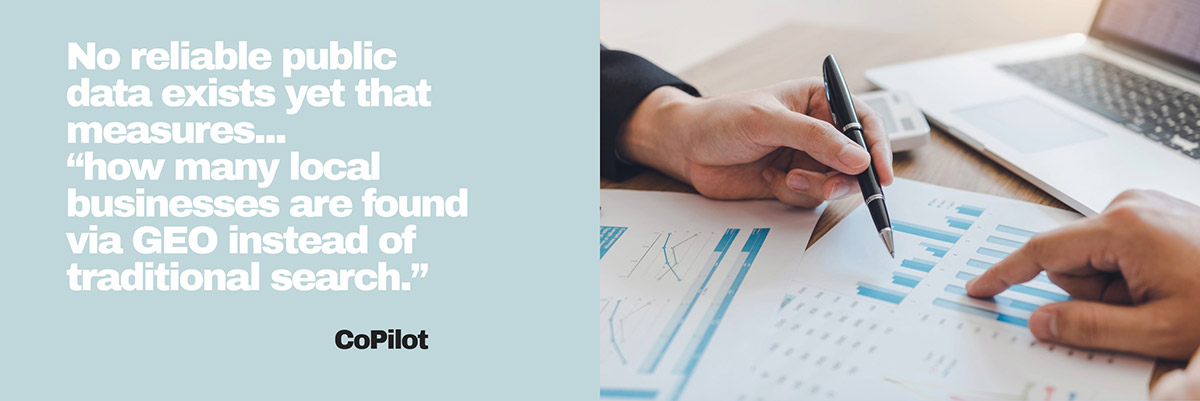
GEO Exists Because Search Has Evolved
The rise of AI-powered search doesn't mean traditional SEO is obsolete. Search engines still crawl, index, and rank webpages, and strong SEO fundamentals remain essential for online visibility.
What has changed is how users consume information.
Instead of simply helping webpages rank, content now needs to help AI systems understand, evaluate, and confidently reference it. That's exactly where Generative Engine Optimization comes in.
By creating accurate, well-structured, and authoritative content, businesses can improve their chances of being surfaced not only in traditional search results but also in the AI-generated answers that are reshaping how people find information online.
Search News Articles...
Recent Articles

Wix Shopping Limitations
- Oct 17 2026
- /
- 112

How audio enhances SEO
- Oct 07 2026
- /
- 118

Thunderbird bounce email cleanup
- Sep 22 2026
- /
- 218

Structured Data Testing
- Sep 14 2026
- /
- 230

This Meeting Could Have Been an Email
- Sep 10 2026
- /
- 260

Where Is Your Business Data Really Stored?
- Aug 14 2026
- /
- 331

From Search to Answer Engines: The Rise of GEO
- Jul 21 2026
- /
- 423

Does Instagram Boost SEO?
- Jun 02 2026
- /
- 679

The Growing Gap Between Coding and Engineering
- May 16 2026
- /
- 694

Have AI Agents Destroyed Social Media?
- May 05 2026
- /
- 716
View All News Articles
Categories
A Gold Coast SEO and Web Developer