Have AI Agents Destroyed Social Media?
- May 5, 2026 modified: May, 05 2026
Have AI Agents Destroyed Social Media?
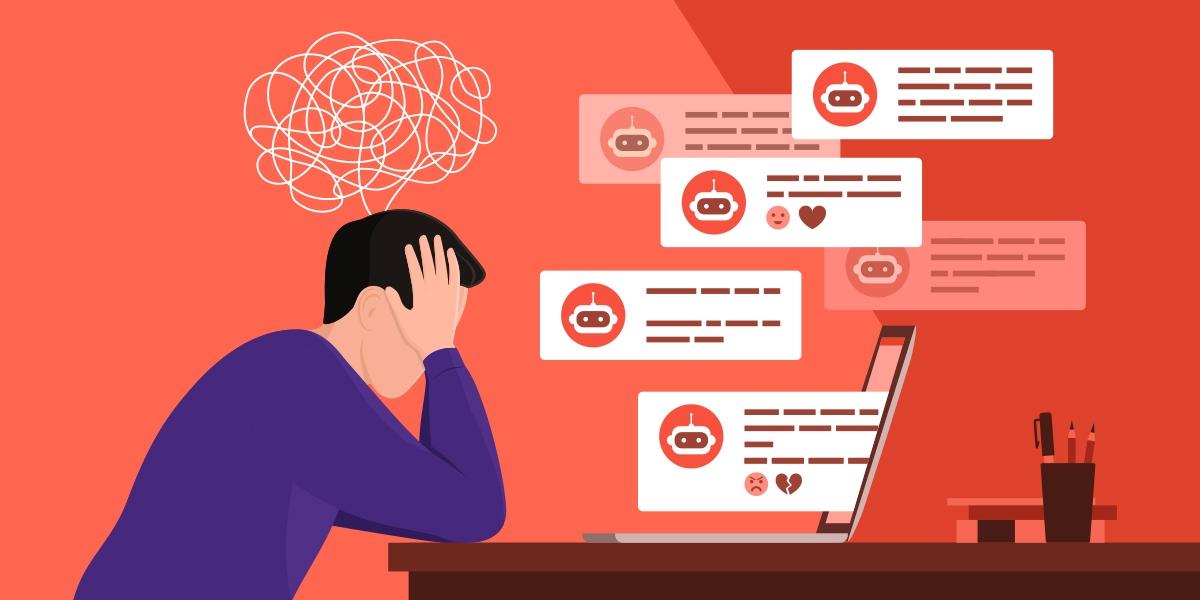
Sometimes social media feels less like a public square and more like a room full of machines talking to each other.
Scroll through almost any platform today and the signs are hard to miss.
The comments under viral posts often feel strangely repetitive. Brand accounts respond with polished but emotionally flat replies. Influencers upload endless streams of motivational content that somehow say everything and nothing at the same time. Even direct messages are increasingly filtered through automated assistants, chatbots, and scheduling tools.
For years, social media was built around the idea of human connection. Platforms promised conversation, community, and authenticity. But the rise of AI-generated content, automated engagement tools, and fake accounts has started to change the atmosphere online. The internet has not become unusable, but it has become noticeably more synthetic.
Artificial intelligence has not destroyed social media entirely. It has, however, exposed a major flaw in the attention economy: platforms reward volume and visibility far more than authenticity.
And AI is exceptionally good at producing volume.
Why AI Struggles With Real Community
AI can generate captions. It can recommend hashtags. It can summarize trends and determine the "best" time to post.
What it struggles to do is replicate genuine human interaction.
Social media was never just about publishing content. It was about making people feel seen.
That requires emotional intelligence, timing, humor, empathy, and cultural awareness — qualities that remain difficult to automate convincingly. Human interaction is often messy, spontaneous, and imperfect.
Ironically, those imperfections are what make conversations feel authentic.
AI-generated social media management often produces the opposite effect. Responses become overly polished. Brand personalities begin sounding identical. Comment sections fill with generic encouragement and recycled phrases. Even when the wording is technically correct, users can sense when interaction lacks sincerity.
This is especially noticeable during moments that require nuance. A delayed joke, a poorly timed automated response, or an emotionally tone-deaf post can damage trust almost instantly. Community-building depends heavily on context, and context remains one of AI's weakest areas.
The issue is not that AI tools are useless. The issue is that social media managers sometimes mistake automation for connection.
Efficiency and authenticity are not always the same thing.

The Growing Problem of Fake Engagement
At the same time, AI has amplified another long-standing issue online: fake engagement.
Bots, purchased followers, automated comments, and engagement farms have existed for years, but AI has made them significantly more convincing and easier to scale. A fake account no longer needs to post obvious spam. It can now generate realistic bios, profile photos, comments, and even conversations.
This creates a serious problem for businesses and creators trying to measure success online. Google Analytics (GA4) now emphasise engagement as a key metric in websites because it measures how many sessions involved meaningful interaction — not just visits.
A post may appear popular because it receives thousands of interactions, but not all engagement reflects genuine audience interest. Brands can end up making marketing decisions based on inflated or artificial metrics. Advertisers may spend money reaching accounts that are inactive, automated, or entirely fake.
The result is a growing trust problem across platforms.
| Human Engagement | AI/Bot Engagement |
|---|---|
| Genuine conversation | Generic comments |
| Builds trust over time | Inflates vanity metrics |
| Emotionally nuanced | Pattern-based responses |
| Community-driven | Algorithm-driven |
| Harder to scale | Cheap and infinite |
This distortion affects creators as well. Smaller accounts trying to grow organically often compete against automated amplification systems that reward constant output rather than meaningful interaction. In some cases, creators feel pressured to use AI tools simply to keep up with the pace of the algorithm.
The internet increasingly resembles an arms race of visibility.
Strategies to Avoid AI Fatigue
As AI-generated content becomes more common online, many users are experiencing a new kind of digital exhaustion. Feeds feel repetitive, conversations feel less genuine, and endless streams of optimized content can become mentally draining. While AI tools are unlikely to disappear, individuals and businesses can take steps to reduce "AI fatigue" and make online experiences feel more human again.
1. Prioritize Human Interaction Over Endless Consumption
Instead of passively scrolling through algorithm-driven feeds, users can focus on spaces that encourage real conversation:
- smaller online communities
- group chats
- forums
- live streams
- private memberships
- in-person events connected to online interests
Meaningful interaction tends to feel more emotionally satisfying than high-volume content consumption.
2. Look for Signals of Authenticity
As synthetic content increases, users naturally value signs of genuine human presence.
Authentic content often includes:
- personal stories
- imperfections
- humor
- nuanced opinions
- spontaneous interaction
- behind-the-scenes moments
Ironically, less polished content can sometimes feel more trustworthy.
3. Use AI as a Tool, Not a Personality
For businesses and creators, AI works best when supporting human creativity rather than replacing it entirely.
Healthy uses of AI may include:
- editing drafts
- organizing schedules
- brainstorming ideas
- automating repetitive tasks
But audiences still respond best to:
- original perspective
- emotional intelligence
- real experiences
- community engagement
People generally do not follow creators solely for efficiency. They follow them for personality and connection.
4. Accept That Not Everything Needs Optimization
AI-driven culture often encourages maximum productivity, maximum engagement, and constant posting. But not every interaction needs to be optimized for performance.
Some of the most memorable online moments are:
- spontaneous
- imperfect
- unplanned
- deeply human
Trying to automate every aspect of communication can strip away the qualities that make social interaction meaningful in the first place.
In many ways, avoiding AI fatigue is less about rejecting technology and more about protecting attention, authenticity, and human connection in increasingly automated online spaces.
The Future May Belong to Human-First Communities
Despite the criticism surrounding AI on social media, automation itself is not inherently harmful. Used carefully, AI can help creators brainstorm ideas, improve accessibility, analyze performance data, and reduce repetitive administrative work.
The danger comes when platforms and brands prioritize efficiency so aggressively that they forget why people joined social media in the first place.
Authenticity is becoming scarce online, and scarcity creates value.
In the future, platforms may place greater emphasis on verified human interaction. Brands may highlight real employees and customers instead of heavily automated messaging. Creators who show spontaneity, vulnerability, and personality may stand out more precisely because so much online content now feels manufactured.
The irony is difficult to ignore: the more artificial the internet becomes, the more valuable human presence becomes.
AI will likely remain part of social media permanently. The question is not whether automation should exist online, but how much of the social experience should be delegated to machines.
Because at its core, social media was never supposed to be just a content factory. It was supposed to be social.
Social media was designed to connect people. The challenge now is making sure people are still part of it.
Search News Articles...
Recent Articles

Structured Data Testing
- Sep 14 2026
- /
- 58

This Meeting Could Have Been an Email
- Sep 10 2026
- /
- 86

Where Is Your Business Data Really Stored?
- Aug 14 2026
- /
- 191

From Search to Answer Engines: The Rise of GEO
- Jul 21 2026
- /
- 315

Does Instagram Boost SEO?
- Jun 02 2026
- /
- 544

The Growing Gap Between Coding and Engineering
- May 16 2026
- /
- 568

Have AI Agents Destroyed Social Media?
- May 05 2026
- /
- 612

Your IP Address and SEO
- Mar 06 2026
- /
- 990

Keywords no longer as visible in GSC
- Jan 12 2026
- /
- 1684

Unique Web Systems Matter in a World of Sameness
- Dec 26 2025
- /
- 1229
View All News Articles
Categories
A Gold Coast SEO and Web Developer